
Ask for a status, not a verdict
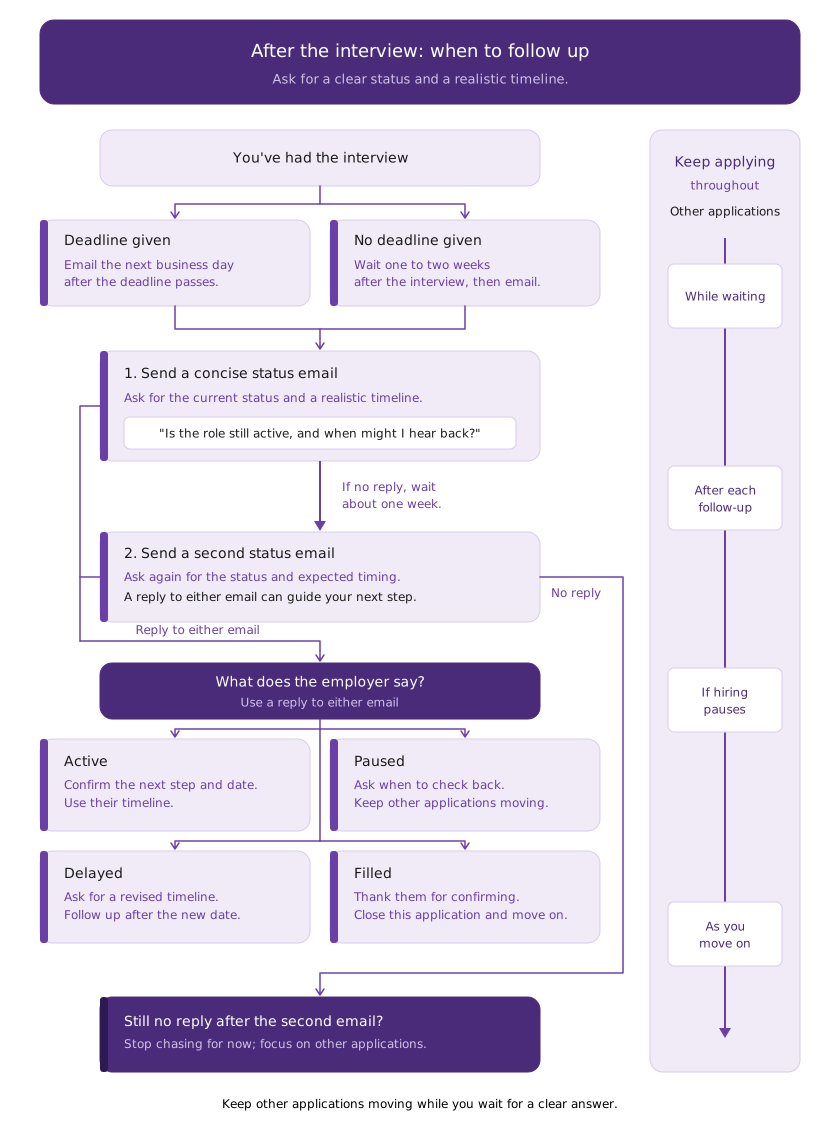
Send one concise status request after the employer's stated deadline has passed. If they gave you no date, wait one to two weeks after the interview. Ask whether the role is still active and when the next decision is expected. Do not demand an explanation for the silence.
If you prefer a more cautious timetable, University of Washington Bothell advises waiting until the promised date is more than a week past. Its guidance recommends politely asking about the employer's decision-making timeline and the status of your application.
Write to the recruiter or hiring manager who has been handling the process. After a first interview, ask whether the position is still moving forward and when the team expects to decide the next step. After later rounds, you can be more specific: "Is the role still active? If it is on hold or has been filled, could you let me know? If the process is continuing, what is the next decision point and revised timeline?" If there is no firm date, ask when it would be reasonable to check back.
Suppose the team said it was consolidating feedback, then a month passed without an update. Ask for a candid status report, even if you have already heard through a colleague that hiring may be paused. Treat that secondhand report as unconfirmed. You need the employer to tell you whether the role is active, on hold or filled, not to deliver a verdict on your interview.
Silence does not name the outcome
A blank inbox establishes one fact: the employer has not updated you. It cannot tell you whether the team is still interviewing, waiting for feedback, dealing with an unavailable decision maker or reconsidering the vacancy. It does not prove that you have been rejected or that the role has been filled.
Vanderbilt career guidance lists a delayed process, a paused position and an internal hire as possible explanations after an unanswered follow-up. Yale career guidance points to ongoing interviews, pending feedback from the hiring team and a recruiter or hiring manager being out of the office. These are possible reasons for a late response, not conclusions you can draw from silence.
Communication can also fail inside the employer. Swipejobs describes a possible handoff problem in which the recruiter assumes the hiring manager will contact candidates while the hiring manager assumes the recruiter has already done so. It also describes a role being paused during a budget discussion, with the team delaying an update while the outcome remains uncertain. Neither scenario establishes what has happened in your process.
A missed update date confirms only that the stated timeline has slipped. Until the employer provides a direct answer, treat the process as unresolved. A delayed decision, a hiring pause, an internal hire and a filled vacancy are different outcomes, even though each can produce the same empty inbox.
What a hiring pause can look like
A hiring pause can interrupt recruitment before or after your interview. Restructuring, budget cuts, industry changes or an economic downturn may lead an employer to freeze hiring and postpone or cancel interviews. During a budget discussion, the team may not yet know whether the role will continue. It may delay contacting candidates while it waits for an answer.
The vacancy can remain open without moving forward. In Oracle Recruiting, an employer can suspend an open requisition during a hiring freeze or when hiring has been postponed. Suspension prevents further action on applications until the requisition resumes. A stalled process may therefore reflect the status of the role, but the silence alone cannot tell you how the employer assessed your interview.
A paused requisition is different from a filled one. A review date gives you a checkpoint, but it does not guarantee that hiring will resume then. An update can also be missed when the recruiter expects the hiring manager to contact candidates and the hiring manager expects the recruiter to do it. Ask for a direct answer rather than trying to infer the outcome from silence.
The email that asks for a clearer answer
Give the recipient enough detail to place you: name the role, the interview date, and either who you met or the interview setting. Add one relevant point from the conversation, restate your interest, then ask directly about the role's status and revised timeline. Keep the message brief and do not speculate about the delay.
Subject: Follow-up on [Role] interview
Hi [Name],
I am following up on my interview for the [Role] position with [Interviewer] on [date]. I appreciated our conversation about [specific topic] and remain interested in the role.
Could you confirm whether the role is still active, on hold, filled or awaiting a decision? If the process is continuing, what is the next step, and when do you expect to make that decision? If the schedule has changed or you cannot give a firm date, when would be a reasonable time for me to check back?
Thank you for any update you can share,
[Your name]
The second version asks for the status and timing you need without demanding an explanation for the silence.
![Annotated follow-up email titled "Ask for a clear post-interview update", subtitled "A short email that asks where the role stands." Four numbered callouts connect to passages in the message: 1. Role and interview: Name the role and when you interviewed. 2. Continued interest: Keep your interest clear and brief. 3. Ask for role status: Ask if it is active, on hold, or filled. 4. Decision and timeline: Ask what happens next and when to expect it. The email reads: "Subject: [Role] interview follow-up. To: [Recruiter or hiring manager]. Hi [Name], Thank you for speaking with me about the [Role] position on [date]. I'm still interested in the opportunity. Is the role still active, on hold, or filled? What is the next decision point, and what revised timeline should I expect? Best, [Your name]." Bracketed fields are placeholders. Footer: "Keep applying while you wait for a clear update."](/blog/how-do-you-follow-up-after-an-interview-with-no-response/clear-status-email-anatomy.svg)
If you already sent one email
You have already checked in once. If another week passes without a reply, send one final, short follow-up. Yale permits a second follow-up after a week, and Boston University recommends no more than two messages, spaced at least a week apart.
This is the point to ask for the information you need to plan, rather than trying to decode the silence. You may have completed one interview, or several technical rounds and a hiring-manager conversation. The message stays the same: is the role active, on hold, or filled, and when should you expect a decision?
Keep it to this. Do not mention that a colleague suggested there may be a hiring pause, and do not ask whether another candidate is preferred. Referring to your interview date and earlier email gives the recipient enough context.
If this second message also receives no response, stop following up and continue applying elsewhere. You can remain open to a later reply without treating this process as your only live option.
Use the timeline as a planning boundary
A first interview and a final round can create different expectations, but use the same boundary for planning. Follow up after the employer's deadline, or one to two weeks after the interview if no date was given. Send no more than two courteous emails and leave at least a week between them.
Keep the application in your records so you can respond if the employer returns. In the meantime, arrange other interviews and continue applying. If you receive an offer elsewhere, compare it with the options and deadlines you actually have, not a possible update from an employer who has gone quiet.
The same rule applies whether you completed one interview or several technical and hiring-manager rounds. Later rounds give you more detail to reference in an email, but they do not make silence a rejection notice. They also do not establish that the role is filled, paused or still awaiting a decision.
This boundary tells you when to stop spending time on follow-ups. It is a search-planning decision, not a judgement on your interview or a prediction of what the employer will eventually decide.
For your next applications, cvlift.ai's AI suggestions let you preview edits that make your CV text more concise, fix typos or improve its style before you accept them.