
A salary figure can screen you out, but silence can stop the application
Pause at the salary field before you submit. A number can help an employer check that your expectations fit its budget, but a figure above the maximum may end the application early. Marquette notes that some employers will not interview candidates whose expectations exceed their maximum range.
Do not treat every salary question the same. Start with what the form actually permits. If the field is optional or accepts text, Harvard Career Services says you may be able to leave it blank or write "negotiable". If the field requires a number, give it an answer the form can accept. Workable documents that numeric fields accept numbers only, so "negotiable" will not get past that format.
Early questions are often a budget check, not a final judgement of your value. Harvard says employers with restricted budgets may ask during an application or early interview to see whether a candidate would consider their general range before either side spends more time interviewing. That is why a required field calls for a practical response, while an optional one gives you room to defer the conversation.
For example, if a form accepts a range, you might enter a range you would consider. If it accepts only one number, enter a single figure you can stand behind rather than trying to force a text answer into a numeric box. You can still discuss compensation later; the application field only establishes whether there may be enough overlap to continue.
The salary field may be a budget check
A salary field can act as an early budget check. That does not mean every employer uses it to reject applicants, but some may decline to interview candidates whose expectations sit above a fixed maximum.
Harvard Career Services notes that employers with restricted budgets, including some nonprofits, government bodies and educational institutions, may ask during the application or an early interview to check whether you would consider their general pay range before either side spends more time on interviews. Private-sector employers may ask early too when their pay range has little flexibility or falls below the market rate.
Marquette says some companies will not interview candidates whose salary expectations exceed their maximum range. For those employers, the field can work as a knockout criterion. It does not tell you why a particular employer rejected an application, or whether salary was the only factor.
For example, if a role has a fixed maximum of £55,000 and an applicant enters £70,000, the employer may decide not to arrange an interview. You cannot tell from the form alone whether that employer will use the answer this way. A stated figure does, however, give them a direct comparison against their budget.
That is why the next decision is less about finding a perfect number and more about answering in a way the form allows without making a promise you cannot support.
The single-number trap
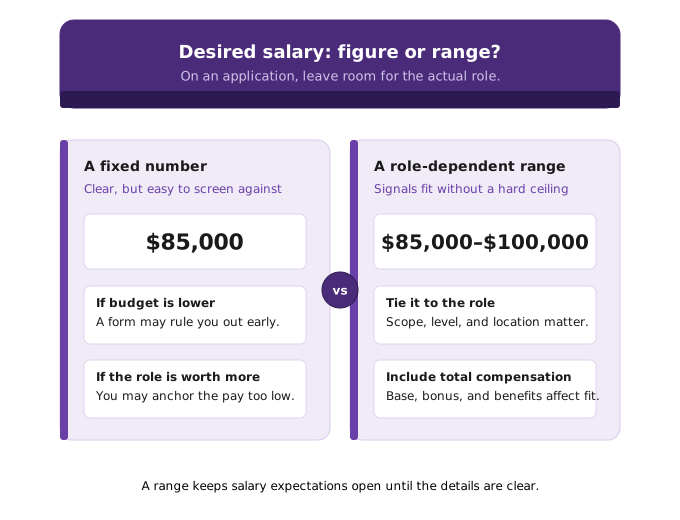
Putting one number in the box can make an early screen feel more final than it needs to be. The UMBC Career Center warns about the squeeze: a figure that sits above the employer's budget may take you out of consideration, while a low figure can reduce what you might earn.
If the application gives you room to answer in words, keep the answer tied to the role rather than presenting a fixed demand. You are not refusing the question. You are saying that the responsibilities, level, and full package affect your answer.
These are hypothetical examples. The first gives one fixed figure; the second gives a range and states that the package matters. Use wording that reflects what you could genuinely accept, rather than treating either example as a script for every role.
If the form requires a pre-offer figure, UMBC recommends a range rather than a single amount. Choose a range you could genuinely accept. If the field accepts text and you would rather defer, write that your requirements are negotiable until both sides have established fit.
Choose the answer the form allows
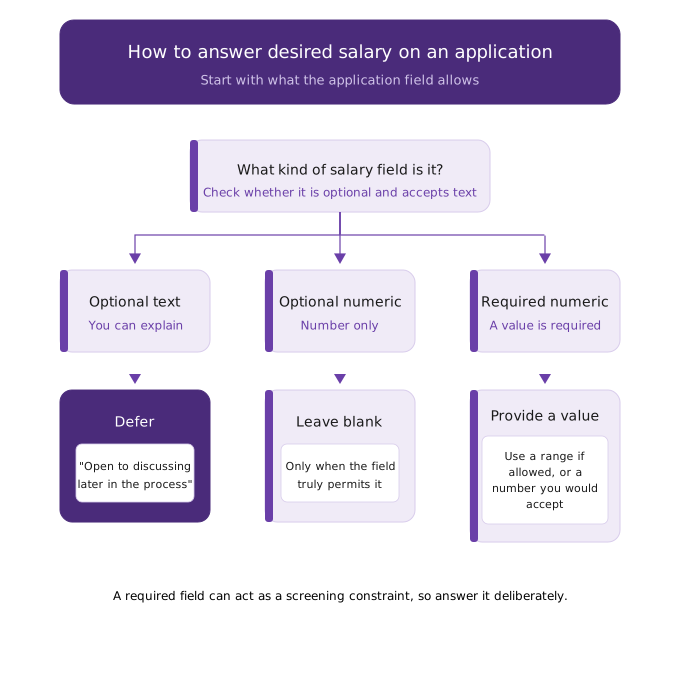
The field type decides how much room you have to defer. A numeric field accepts numbers only, so "negotiable" belongs in a text field, not a digits-only box.
If the salary field is optional and accepts text, leave it blank or write "Negotiable". UMBC Career Center recommends saying requirements are negotiable before an offer rather than naming a figure. In an optional text field, you can write: "My requirements are negotiable depending on the role details; I would be happy to discuss compensation once we have established fit."
Separate a field that accepts a range from one that accepts a single number. If the form permits a range, enter one you would genuinely accept. For example: "$70,000–$90,000, depending on the specific role requirements and total compensation package." If the form accepts only one number, enter a figure you can stand behind. Workable notes that numeric fields accept numbers only, and Harvard Career Services says "negotiable" or a blank applies only when a number is not required.
A range gives context where the form allows it. A single-number field does not. In either case, enter an answer you would not regret later.
When deferring is the better answer
Defer when the form gives you room to do so: an optional text field, a free-response box, or an early recruiter email. Minnesota State University advises putting off salary discussion until an offer where possible, because an early number can pressure you to name less simply to stay in consideration.
UMBC Career Center suggests a simple answer for an application submitted before an offer: say that your requirements are negotiable rather than naming a figure. That keeps you from turning an incomplete picture of the role into a fixed number.
This is a deferral, not an attempt to dodge a required field. If the application only accepts a number, or the recruiter asks you to state your requirements after you defer, give an answer the process can accept. But when a response box allows context, postponing the figure can stop you from anchoring yourself to a lower amount before you know the job properly.
Read the field before you answer
Read the label before you fill the box. "Desired salary" asks what you would consider for this role. "Salary history" asks what you earned before. They are different questions, and putting past pay into an expectations field answers neither one well.
If the application asks for your salary expectations, keep your answer focused on this job. A required numeric field needs a number you could genuinely accept. A text field may let you enter a range or briefly defer the discussion, as covered earlier in this article.
The distinction can matter legally, but it does not need a long detour here. Illinois prohibits employers from requesting or requiring an applicant's prior wage, salary, benefits, or other compensation history as a condition of consideration; it permits discussion of salary and benefits expectations. California generally prohibits employers from seeking an applicant's salary history, including compensation and benefits, with a public-record exception. Those protections concern past pay. They do not make a desired-salary field a salary-history question.
Use a posted range as useful context, where one appears. New York's pay-transparency law requires covered employers to post a good-faith pay range for covered advertised opportunities. If you see one, compare it with what you would accept before deciding how to answer the form.
The second response is hypothetical, not a figure to copy for a particular market or role. Answer the field in front of you, and do not substitute earlier pay for an expectation about this role.
Try it on your own application
Before you submit, check three things: does your answer address desired salary rather than past pay; does the field accept the format you entered; and, if you gave a figure or range, could you genuinely accept it? A range may preserve more context where the form allows one. A required numeric field may require a single number instead.
Do not treat a salary answer as a final agreement. It gives the employer a comparison point for its budget and gives you a chance to decide whether the role is worth pursuing.
Once that answer is settled, use cvlift.ai's AI suggestions to make the CV text you provide more concise, fix typos, or improve its style for the role.