
The ATS let you through. The human might not.
Beating the Applicant Tracking System is just a mechanical victory. It means your resume had enough keywords to trigger a positive algorithmic response. Passing that initial digital barrier is only step one. The real test begins the moment a human face appears on your screen. You now have to prove that the highly optimized piece of paper on their desk matches the professional sitting behind the camera.
The problem is not that you are unqualified. The problem is that most candidates prepare for the wrong things. They memorise their CV, rehearse their accomplishments, then the recruiter asks a question that has nothing to do with competence, and the answer comes out sounding like a cover letter written by someone who has never read the job description.
Preparation is not memorising your CV
You already know what is on your CV, and the recruiter has read it. Repeating it back word-for-word wastes both your time.
Preparation means researching the company well enough that you can talk about what they actually do, not what their About page says they do. Look at their recent product launches, their LinkedIn posts, their job openings in other departments. If they have a blog, read two posts, if they have a GitHub, skim the repos. You are not trying to become an expert. You are trying to sound like someone who did ten minutes of homework instead of zero.
Write down three questions you would ask if you were already working there. Not "What is the company culture like?"—that is a waste of a question. Ask about the team structure, the tools they use, the biggest challenge the department is facing right now. Real questions signal that you are thinking past the offer.
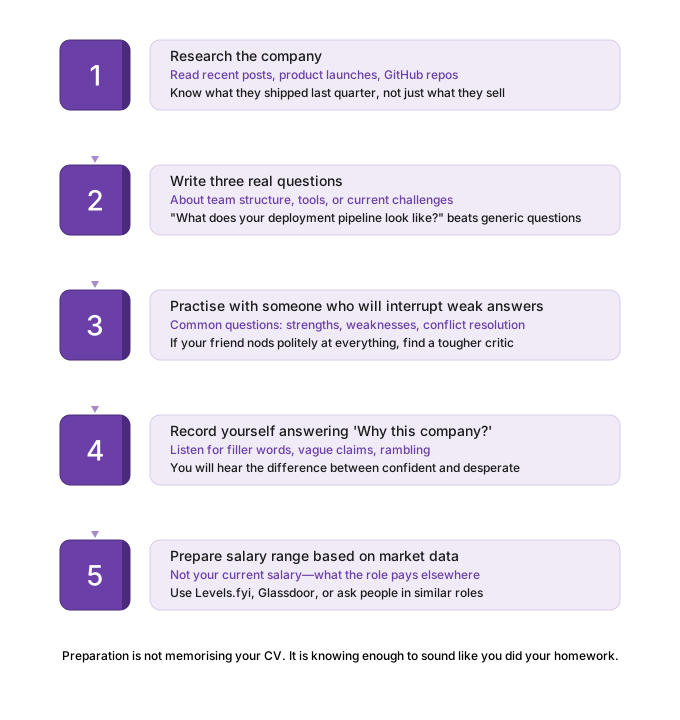
Mock interviews help, but only if you treat them seriously. Practising with a friend who nods along while you ramble is not useful. Practising with someone who interrupts you when you dodge a question, someone who makes you defend an answer you are not sure about, is useful. If you do not have that person, record yourself answering common questions and play it back. You will hear the filler words, the hedging, the places where you sound like you are reading a script.
The questions you hate exist for a reason
"Why do you want to work here?" is not a trick question. It is a filter. The recruiter is checking whether you applied to this job specifically or whether you are sending the same CV to two hundred companies and hoping something sticks.
The wrong answer sounds like this: "I have always admired your company's commitment to innovation and excellence." That is not an answer. That is a sentence you could drop into any interview without changing a word.
The right answer names something specific. A product they launched. A team they acquired. A shift in strategy you noticed. Then you connect it to what you want to do next. You are not flattering them. You are showing that you read past the job title.
"What is your biggest weakness?" is worse, because the question is designed to make you either lie or self-sabotage. If you say "I am a perfectionist," the recruiter has heard it a thousand times and knows you are dodging. If you say "I am terrible at time management," you have just told them not to hire you.
The answer that works is specific, minor, and paired with what you are doing to fix it. Not "I struggle with delegation" but "I used to rewrite other people's work instead of giving feedback, which slowed projects down. I have been using a review checklist to separate 'this needs to change' from 'I would have written it differently,' and it has helped." You are admitting a real flaw without making it sound like a dealbreaker.
Sounding confident when you are not
Confidence in an interview is not about volume or charisma. It is about not apologising for things that do not need an apology.
If you do not know the answer to a technical question, do not guess. Do not say "I am not sure, but…" and then guess anyway. Say "I have not worked with that directly" and then talk about the closest thing you have done. If the recruiter wants to move on, they will. If they want to dig deeper, you have given them a real answer instead of a bluff they can fact-check later.
Introverts have a harder time here, not because they are less competent but because interviews reward people who can perform certainty on demand. If you are someone who needs time to think before answering, say so. "Let me think about that for a second" is better than filling dead air with filler words while your brain catches up. Pausing makes you sound thoughtful. Rambling makes you sound unprepared.
If you are on a video call, look at the camera when you answer, not at the screen. It feels unnatural, but the recruiter sees it as eye contact. If looking at the camera makes you freeze, look at the top edge of your screen instead. Close enough.
The cover letter question
Recruiters are split on whether cover letters matter. Some read them. Some do not open the file. Some only read them if they are on the fence about a candidate.
The safe assumption is that if the application asks for one, someone might read it, so it should not contradict your CV or sound like you wrote it for a different job. If your CV says you spent three years leading a team, and your cover letter says you are looking for your first leadership role, you have just created a question the recruiter has to resolve before moving forward.
A good cover letter does one thing: it explains why this job, at this company, right now. It does not restate your CV. It does not list your skills. It connects what you have done to what they need. Two paragraphs. Three at most.
If the application does not ask for one, do not send one unless you have something specific to explain: a career gap, a location move, a shift in industry. Otherwise you are adding words no one asked for.
The salary conversation is a negotiation, not a confession
The recruiter will ask about salary expectations. If you name a number first, you set the ceiling. If you say "I am flexible," you sound like you do not know your worth.
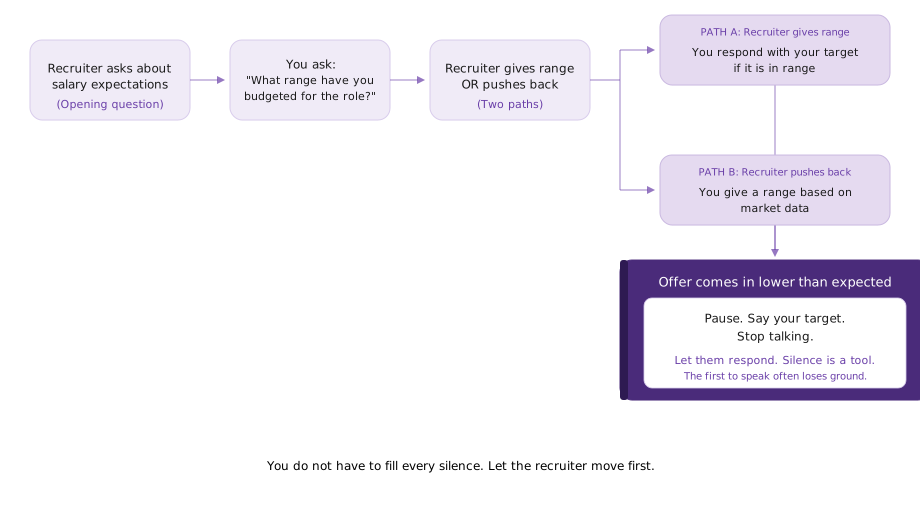
The move that works: turn it back. "I would love to hear what range you have budgeted for the role." Most recruiters will tell you. Some will push back and ask again. If they do, give a range based on market data, not on what you currently earn.
A Reddit user posted about a tactic that worked for him when the recruiter's offer came in lower than expected. He did not argue, nor did he justify, he just went silent. The recruiter filled the silence by raising the offer twice.
That is not advice to follow blindly. It worked because the recruiter had room to move and the candidate had leverage. But the principle holds: you do not have to fill every silence. If the number is lower than you expected, you can say "I was hoping for something closer to [X]" and then stop talking. Let them respond.
Do not apologise for asking. Do not say "I know this is a bit cheeky, but…" You are not being cheeky. You are doing what every recruiter expects you to do.
What not to do
Do not trash your current employer, even if they deserve it. The recruiter does not know whether you are telling the truth or whether you will say the same thing about them in two years.
Do not pretend you know something you do not. If the recruiter asks about a tool you have never used, say so. Then talk about how quickly you picked up the last unfamiliar tool. That is a better answer than nodding along and hoping they do not ask a follow-up.
Do not ask about salary, benefits, or remote work in the first interview unless the recruiter brings it up. You can ask in the second round. Asking too early makes it sound like the job itself is secondary.
Do not use AI to answer questions in a live interview. If you are on a video call and you are reading answers off a second screen, the recruiter can tell. Your eyes move. Your tone flattens. It is obvious, and it is worse than just saying you do not know.
If you are overqualified or underqualified
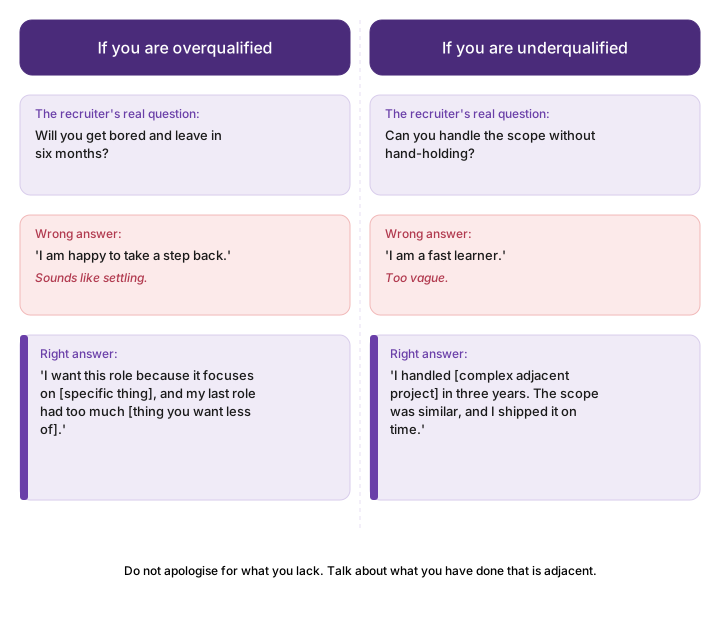
If you are overqualified, the recruiter's real question is whether you will get bored and leave in six months. The answer is not "I am happy to take a step back." That sounds like you are settling. The answer is specific: you want this role because it lets you focus on [X], or because the company is doing [Y], or because your last role was too much travel and this one is not.
If you are underqualified, do not apologise for what you lack. Talk about what you have done that is adjacent. If the job asks for five years of experience and you have three, talk about the complexity of the projects you handled, not the calendar time. If they wanted someone with exact match experience, they would have hired internally.
Try it before your next interview
Pick one question you hate answering. Write down your current answer. Now rewrite it so it is specific, short, and does not sound like you are reading from a script.
If you have an interview coming up, spend fifteen minutes researching the company. Not the About page. Find one recent thing they did: a product launch, a hire, a pivot. Then write down one question about it.
If you are stuck on salary negotiation, look up market rates for your role and location on Glassdoor or Levels.fyi. Write down the range. Practise saying it out loud without hedging.
The interview is not a performance. It is a conversation where both sides are trying to figure out if the fit is real. Your CV got you in the room. What you say next is what gets you the offer. If you are still refining how you talk about your experience, cvlift.ai's AI suggestions can help you shape the stories that land.