If you are exhausted from fighting Applicant Tracking Systems (ATS), sending cold applications into the void, and receiving generic rejection emails, it is time to change your approach. It makes much more sense to flip the script so that recruiters and department heads write to you directly. The most effective place to make this happen is LinkedIn. However, having a nominal page with just a list of your past experiences will not work on its own. You need to actively develop your profile so it functions as a powerful channel for inbound offers. When you use the platform consciously and systematically, it transforms your job hunt and professional growth.
Open your LinkedIn profile right now
Look at your headline. Does it say "Marketing Manager at Company X" or "Seeking new opportunities"? Now scroll to your experience section. Does it read like a job description, or does it show what you actually delivered?
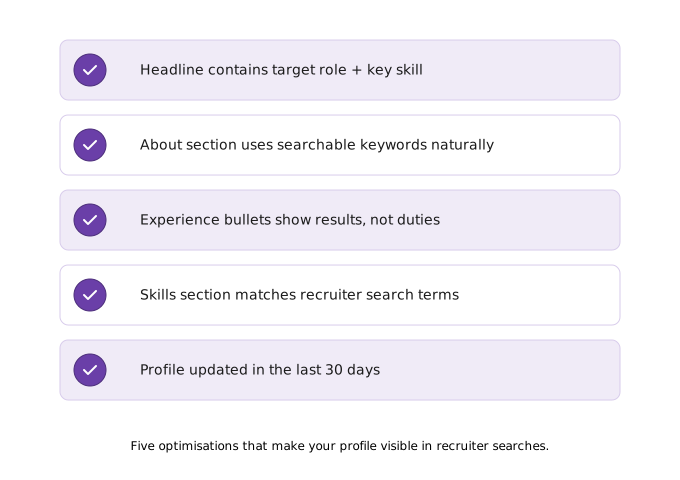
If your profile looks like a static CV you uploaded in 2019 and haven't touched since, you are invisible to the people who matter. Recruiters are not reading your profile because they stumbled across it. They are searching for specific skills and keywords, and if yours are buried under generic job titles and vague responsibilities, you do not exist.
From an Active Seeker to a Visible Asset
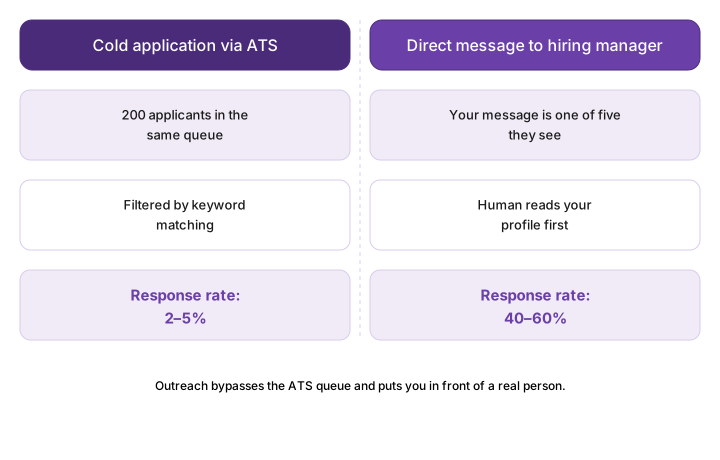
Most professionals treat LinkedIn as a place to park their work history and occasionally apply for jobs through the platform's applicant portal. That puts you in the same queue as everyone else, fighting the same ATS filters, waiting for the same rejection emails.
The smarter play is to stop applying altogether and start showing up in recruiter searches. When your profile is optimised and active, hiring managers and department heads find you. They message you directly. You skip the ATS entirely.
Many companies do not even use traditional job boards anymore; they post openings exclusively on LinkedIn because it is convenient and allows them to publish vacancies for free for the first three days. Sometimes, roles are simply posted directly in a company's feed. By relying only on classic job sites, you are highly likely to miss out on these hidden opportunities.
Think of your LinkedIn page as a portfolio and resume that is available 24/7 to hiring managers, recruiters, and founders. When properly optimized with the right keywords and skills, recruiters will find you without you having to actively search.
Your profile is not a CV. It is a search result.
To get noticed, you must be active. The platform rewards engagement. When you like and comment on posts in your professional sphere, you show that your profile is alive. Furthermore, the more active you are—publishing posts, commenting, and updating your profile—the higher you appear in search results for recruiters.
Do not be afraid to show your real self. The platform has evolved from a strictly formal space into a place where authenticity matters, borrowing engaging formats like short videos from visual social networks. Try to repost interesting content with your own commentary at least once a week, or share your own thoughts on industry trends, current projects, and professional challenges.
Sharing stories about your career path, including mistakes and successes, resonates well with this high-quality audience. Encourage discussions by presenting your thoughts in a way that invites people to share their opinions in the comments, which helps you understand your market better and builds your personal brand.
Activity is not optional
LinkedIn's algorithm rewards engagement. The more you interact with the platform, the higher you rank in search results. A profile that has not been touched in six months gets buried. A profile that posts, comments, and updates regularly gets surfaced.
You do not need to become an influencer. You need to show that your profile is alive. Comment on a post in your industry once a week. Share an article with a short take. Update your skills or add a new project. Each action signals to the algorithm that you are active, which makes you more visible to recruiters running searches.
The platform has also shifted culturally. It is no longer the stiff, corporate space it was five years ago. Authenticity performs better than polish. A short post about a challenge you faced at work or a lesson you learned will get more traction than a press-release-style announcement. People respond to real voices, not corporate speak.
If you are uncomfortable posting, start small. Repost something relevant with a two-sentence comment. Ask a question about a trend in your field. The goal is not to go viral. The goal is to stay visible.
Build a network that outlasts your job
Instead of mass applications, focus on targeted outreach and relationship building. Reaching out through direct messages is an excellent way to connect with the right people, ask for a referral, or gather insider information to prepare for an interview. Your LinkedIn connections are yours. Unlike a company CRM or a work email, they do not disappear when you change roles. That makes your network one of the most valuable career assets you own, but only if you treat it that way.
Instead of sending dozens of cold applications, spend that time reaching out to people directly. A message to a hiring manager or a recruiter at a company you are interested in is far more effective than submitting your CV through an online portal. You can ask about the hiring process, the team culture, or whether a role is still open. Most people will respond, especially if your message is specific and respectful.
Make these habits part of your routine:
Your network compounds. Every connection is a potential referral, introduction, or insider tip. The people who get hired fastest are not the ones with the best CVs. They are the ones who know someone on the inside.
If you freelance or consult, LinkedIn is your storefront
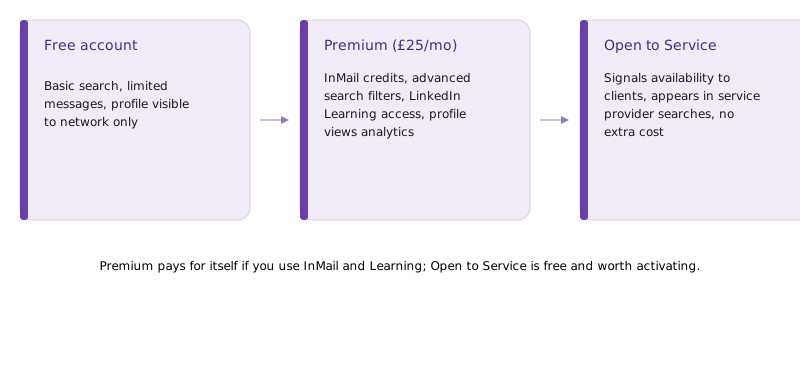
Freelancers used to rely on marketplaces where clients filter by price and treat talent like a commodity. LinkedIn has introduced features like "Open to Service" that let you signal availability without looking desperate. When activated, your profile becomes visible to clients searching for expertise, not the cheapest bid.
If you invest in a premium account to reach out to potential clients or employers, you also unlock LinkedIn Learning. That gives you access to thousands of courses on marketing, management, and programming at a fraction of the cost of standalone platforms like Coursera or Udemy. The ROI is immediate if you use it.
Start with a small update
Pick one section of your LinkedIn profile and rewrite it with specific skills and results. If you are a project manager, do not write "Managed projects." Write "Led five cross-functional projects for a SaaS client, delivering all milestones on time and reducing sprint overrun by 18%."
Then send one message to someone at a company you are interested in, not a connection request with no note: a real message. Ask them one question about their work or their team. Most people will respond.
When you treat LinkedIn as a daily habit instead of a static resume, the platform starts working for you. Recruiters find your profile. Opportunities come inbound. The exhausting cycle of cold applications becomes optional. If you are still sending dozens of CVs into ATS portals and hearing nothing back, cvlift.ai can help you optimise your CV so the right keywords and results show up where recruiters are actually looking.